
The 2025–2026 winter season across the Northeast brought extended stretches of below-normal
temperatures, and with that came a problem many homeowners experienced firsthand: roof ice dams.
If you noticed large ridges of ice along your roofline, icicles forming where they normally don’t, or
even water stains inside your home, ice dams were likely the culprit.
The good news? Ice dams are preventable — and spring is the perfect time to address the root
causes.
What Is an Ice Dam?
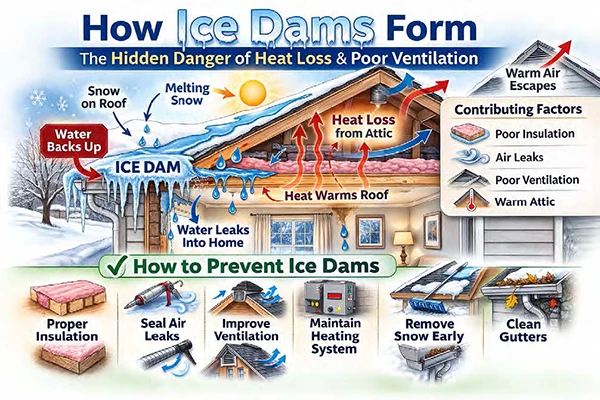
An ice dam forms when snow on a roof melts, flows downward, and then refreezes at the colder eaves. Over time, this creates a barrier of ice that traps melting water behind it.
That trapped water has nowhere to go — except under shingles and into your home, where it can damage:
- Roof decking and shingles
- Insulation
- Ceilings and walls
- Gutters and fascia boards
Why Ice Dams Were So Common This Winter
This past winter’s sustained cold temperatures, combined with snow events, created ideal conditions
for ice dams across the Northeast.
But cold weather alone isn’t the real cause. The primary driver is heat loss from inside the home. When warm air escapes into the attic, it heats the roof surface just enough to melt snow — even when outside temperatures stay well below freezing. That melted snow refreezes at the roof edge, where temperatures remain colder.
The Real Issue: Heat Loss
Ice dams are often a visible symptom of hidden heat loss, caused by:
- Inadequate attic insulation
- Air leaks around attic hatches, ductwork, or recessed lighting
- Poor attic ventilation
- Older or inefficient heating systems working harder than necessary
In other words, your home may be losing heat you’re paying for — and ice dams are a warning sign.
Why Spring Is the Best Time to Fix the Problem
Once winter is over, homeowners often move on — but spring is the ideal time to prevent ice dams
before next winter arrives. Corrective measures are far more effective (and less stressful) when done proactively.
Smart Corrective Measures to Take This Spring
1. Improve Attic Insulation
Proper insulation helps keep heat where it belongs — inside your living space — and prevents uneven roof temperatures.
2. Seal Air Leaks
Gaps around attic access points, plumbing vents, and electrical penetrations allow warm air to escape upward.
3. Address Attic Ventilation
Balanced ventilation keeps roof temperatures consistent, reducing the freeze-thaw cycle that causes ice dams.
4. Evaluate Heating System Efficiency
An efficient, well-maintained heating system reduces excessive heat loss and improves comfort throughout the home.
5. Inspect Roof and Gutters
Clearing debris and checking for winter damage helps water drain properly when snow melts.
A Warmer Home — Without the Damage
Preventing ice dams isn’t just about protecting your roof — it’s about:
- Improving energy efficiency
- Reducing heating costs
- Increasing home comfort
- Protecting your investment
If your home experienced ice dams this winter, it may be telling you something important about how heat is escaping.
Plan Ahead for Next Winter
Spring and summer upgrades give homeowners peace of mind when the next cold season arrives.
At HOP Energy, we believe comfort starts with understanding how your home uses — and loses — heat. Addressing these issues now can help ensure a warmer, safer, and more efficient winter ahead.