
If your AC smells musty when it turns on, moisture is usually to blame. Mold, mildew, standing water, or restricted airflow can all create unpleasant odors that spread through your home whenever your air conditioner runs. Homeowners often notice a musty smell at the start of cooling season after moisture has had time to accumulate inside the system.
Gas Smell Warning: When to Call 911
Before troubleshooting a musty AC smell, it’s important to recognize one odor that should never be ignored: natural gas. Often compared to the smell of rotten eggs or sulfur, a gas leak is an emergency. If you notice this smell, leave the home immediately and call 911 or your gas utility provider from a safe location.
A musty smell is typically not an emergency, but it is a sign that something in your HVAC system needs attention.
Why Does My AC Smell Musty?
Most musty smells from air conditioners are caused by excess moisture somewhere in the system. When water collects in drain pans, condensate lines, ductwork, or on HVAC components, mold and mildew can develop and create unpleasant odors.
Identifying the source of the moisture is the first step toward eliminating the smell.
Common Causes of a Musty AC Smell
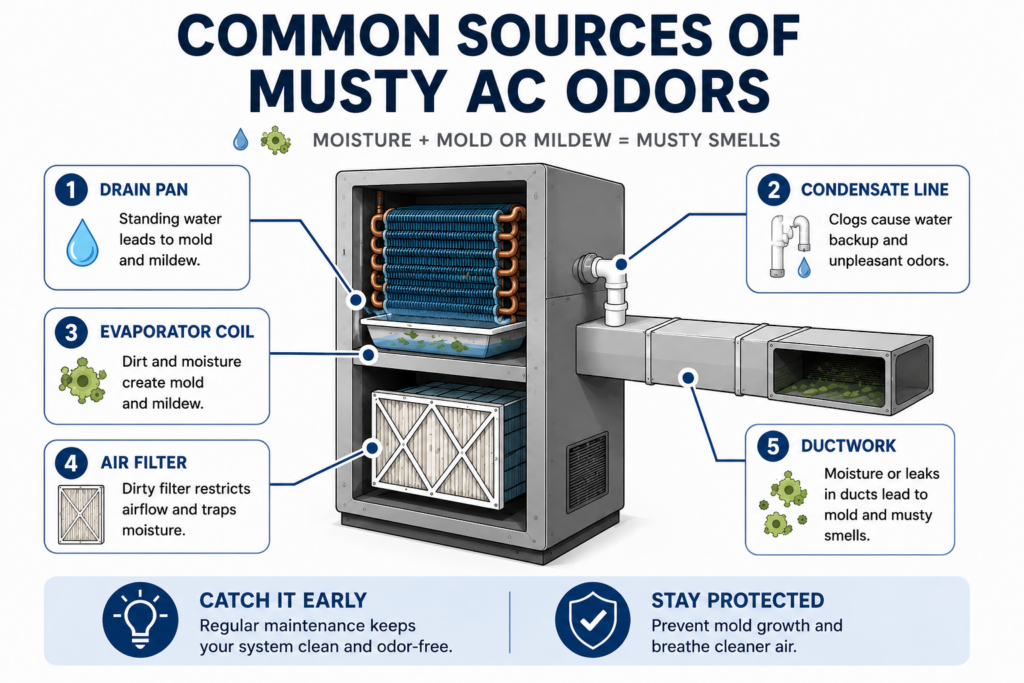
Full or Stagnant Drain Pan
As your air conditioner removes humidity from the air, condensation collects in a drain pan beneath the evaporator coil. If water remains in the pan for too long, mold and mildew can begin to grow.
Check the drain pan for standing water and visible buildup. Cleaning or replacing a damaged pan may help eliminate the odor.
Clogged Condensate Drain Line
The condensate drain line carries moisture away from your HVAC system. Over time, algae, mold, dirt, and debris can clog the line and prevent proper drainage.
A clogged drain line can often be cleared by flushing it with a mixture of water and vinegar. Signs of a blockage may include water near the indoor unit, musty odors, or a full drain pan.
Mold or Mildew in Ductwork
If the musty smell seems strongest when air is blowing through your vents, mold or mildew may be growing inside your ductwork.
Because duct systems are difficult to access and clean properly, professional duct cleaning is usually the safest and most effective solution. An HVAC technician can also identify moisture problems that may be allowing mold to return.
Dirty Air Filter Causing a Frozen Evaporator Coil
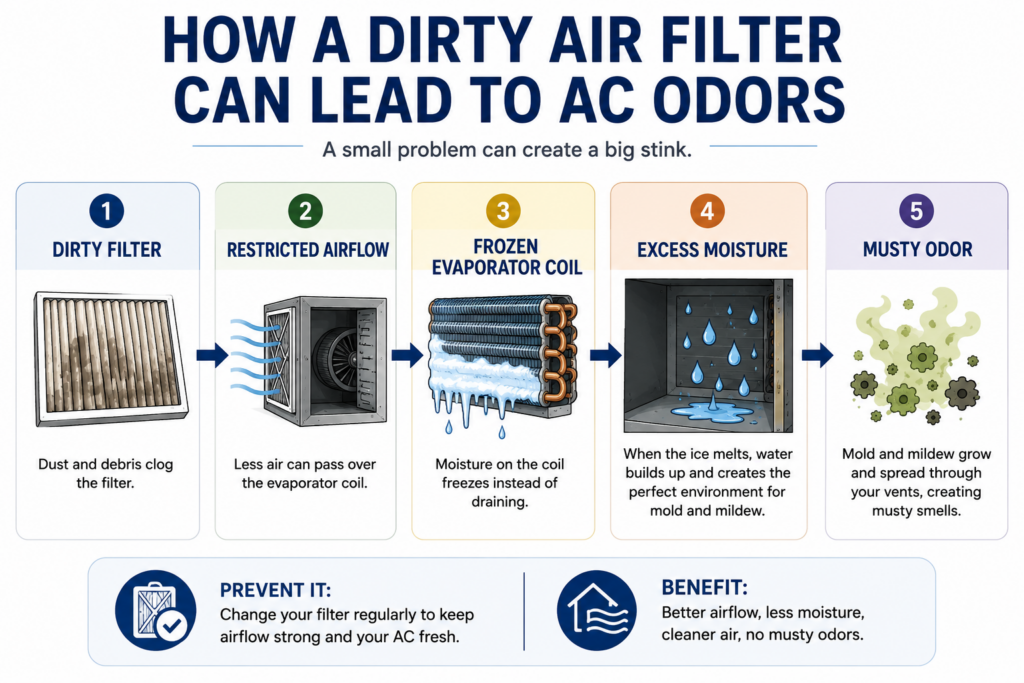
A clogged air filter restricts airflow across the evaporator coil. When airflow becomes too limited, condensation on the coil can freeze instead of draining away properly. The first sign of a dirty air filter can be that your AC system stops blowing cold air.
As the ice melts, excess moisture can contribute to mold growth and musty odors. Replacing the air filter regularly helps maintain airflow and prevent this issue.
Dirty Evaporator Coils
Evaporator coils are constantly exposed to moisture. Over time, dust, dirt, pet dander, and other contaminants can accumulate on the coil surface, creating an ideal environment for mold and mildew.
Dirty coils can also reduce cooling efficiency and force your AC system to work harder. Professional coil cleaning removes buildup, improves airflow, and helps restore indoor air quality.
Leaky Ductwork Allowing Humid Air Inside
Leaks in your ductwork can pull humid air into the system from attics, crawl spaces, and other unconditioned areas. Excess humidity creates the perfect conditions for mold growth and musty odors.
A professional HVAC technician can inspect the duct system and seal leaks to help prevent future moisture problems.
Does a Musty AC Make You Sick?
A musty-smelling air conditioner does not automatically mean you will become sick, but it can indicate the presence of mold or mildew. Exposure to mold spores may trigger upper respiratory symptoms such as sneezing, coughing, congestion, headaches, irritated eyes, or throat irritation.
People with asthma, allergies, or other respiratory conditions may be especially sensitive to poor indoor air quality. Left untreated, mold growth can continue to spread within the system and negatively affect indoor air quality throughout the home. Addressing musty odors promptly can help reduce potential health concerns and improve overall comfort.
Window Air Conditioner Smells Musty
Window air conditioners are especially prone to musty odors because they collect moisture in a compact space. Mold and mildew can develop quickly if the unit is not cleaned regularly.
Start by removing and cleaning the filter. Next, inspect the evaporator coils and drain openings for dirt, debris, or mold growth. A coil cleaner designed for air conditioners can help remove buildup.
In some cases, replacing an aging or inefficient AC unit may be more cost-effective than repeated repairs.
How to Prevent a Musty Smell in Your AC
A few simple maintenance habits can help prevent musty odors from developing in the first place:
- Replace air filters regularly.
- Schedule an annual AC tune-up before cooling season.
- Keep the condensate drain line clear.
- Address water leaks promptly.
- Consider a UV air purifier to help reduce mold growth within the HVAC system.
- Keep indoor humidity levels under control.
Routine maintenance allows HVAC technicians to identify small issues before they become larger problems. Preventive service can also improve system efficiency, indoor air quality, and overall comfort.
Learn more about how your AC affects the air quality in your home by reading our article: The Hidden Link Between Your A/C and Indoor Air Quality
When to Call an HVAC Professional
If your AC still smells musty after replacing the filter and checking for obvious moisture issues, it’s time to call a professional. Persistent odors often indicate mold growth, dirty coils, ductwork issues, or drainage problems that require specialized equipment to diagnose and repair.
Whether you need AC repair, maintenance, or a complete system replacement, HOP Energy’s HVAC technicians can identify the source of the odor and recommend the most effective solution. We can also recommend indoor air quality solutions that help reduce mold, mildew, and airborne contaminants throughout your home.
Frequently Asked Questions
Why does my AC only smell musty for the first few minutes after it turns on?
Dust, moisture, and small amounts of mold or mildew can accumulate while the system is not running. When you turn the AC on, those odors may be pushed through the ductwork and into your home.
Is it safe to run my AC if it smells like mildew?
It is generally safe for a short period, but the odor should not be ignored. A mildew smell often indicates excess moisture or mold growth that should be addressed before it worsens.
How do I get rid of a musty smell from my air conditioner?
Start by replacing the air filter and checking for standing water in the drain pan. If the odor persists, the issue may involve dirty coils, ductwork, or drainage components that require professional service.
Can a dirty air filter cause a musty smell?
Yes. A dirty air filter can restrict airflow, contribute to frozen evaporator coils, and create conditions that allow moisture and mold growth to develop.
What does mold in an AC unit smell like?
Most homeowners describe mold in an AC system as damp, musty, earthy, or similar to mildew. The smell is often strongest when the system first starts running.