
When you need heat or hot water at home, two systems tend to come up in conversations: water heaters and boilers. They sound similar, and they both use hot water, but they operate very differently. If you’re unsure which one you have (or which one you need), this guide will help you understand how each system works, what sets them apart, and how to choose the right fit for your home.
Table of Contents
What Is a Water Heater?
A water heater warms water for showers, laundry, and dishwashing. It doesn’t heat your home—just your domestic hot water supply. Cold water enters the unit, gets heated to around 120°F, and is delivered through your plumbing whenever you open a hot tap. Most homes use a water heater because a separate furnace or heat pump handles space heating.
Types of Water Heaters
Tank Water Heaters
Traditional storage tank water heaters are the most common type in American homes. They maintain a reservoir of hot water (typically 30-80 gallons) that’s constantly kept at temperature. When you use hot water, cold water refills the tank and the heating cycle begins again.
Tankless Water Heaters
Also called “on-demand water heaters,” these units heat water only when you need it. Cold water passes through heating elements or a gas burner, delivering hot water without storage limitations. They’re compact, energy-efficient, and provide endless hot water—though they have flow rate limitations.
Hybrid Water Heaters
These combine heat pump technology with traditional electric heating elements. They extract heat from surrounding air to warm water, using significantly less energy than conventional electric models while maintaining a storage tank for reliability.
What Is a Boiler?
A boiler is a central heating system that warms your home using hot water or steam. It heats water to 140–180°F and circulates it through radiators, baseboards, or radiant floors. Unlike water heaters, boilers are built for continuous, high-temperature operation and play no role in providing domestic hot water unless you have a combi boiler.
Types of Boilers
Combi Boilers
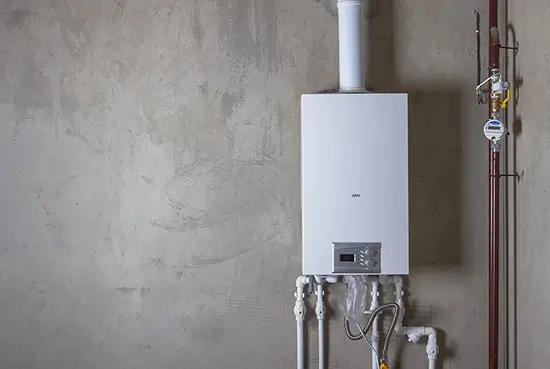
Water heater/water boiler combos (combi boilers) serve a dual purpose: they provide both space heating and domestic hot water from a single compact unit. heat water on demand for taps and showers while also supplying your home’s heating system, eliminating the need for a separate hot water tank.
Conventional Boilers
Also called heat-only or regular boilers, these systems work exclusively for space heating and require a separate water heater for domestic hot water. They’re common in homes with traditional radiator systems or radiant floor heating.
Fuel Sources
Boilers run on various fuel types including natural gas (most common), propane, heating oil, or electricity. The fuel choice typically depends on regional availability and existing home infrastructure.
Is a Boiler the Same as a Water Heater?
No, despite both heating water, these are distinct appliances with different purposes. A boiler is a central heating system designed to warm your home’s living spaces. A water heater supplies hot water for washing, cleaning, and bathing. They operate at different temperatures, serve different distribution systems, and have different design priorities.
The confusion often arises because older terminology referred to water heaters as “hot water heaters” or “hot water tanks,” and some people mistakenly call them “boilers.” In homes with combination boilers that provide both heating and hot water, the line blurs—but the combi boiler is still fundamentally a heating system with added hot water capability.
The Key Differences Between Water Heaters and Boilers
Purpose:
• Water heaters supply hot water for sinks, showers, and appliances.
• Boilers heat your living spaces through radiators, baseboards, or radiant floors.
Operation:
• Water heaters connect only to plumbing.
• Boilers integrate with pumps, controls, and heating distribution systems.
Performance:
• Water heaters run at lower temps and have simpler components.
• Boilers operate hotter, use closed-loop systems, and require professional maintenance.
Can You Use Both a Boiler and a Water Heater?
Many homes use both a boiler and a water heater. A conventional boiler handles home heating, while a separate water heater provides domestic hot water.
A combi boiler replaces both systems in one unit, saving space and equipment costs, though high-demand households may still prefer two separate systems.
Using both also offers flexibility and redundancy—you can upgrade or replace each system independently.
Tankless Water Heater vs. Boiler for Radiant Heat
A tankless water heater can technically support radiant heat, but it’s not ideal. Standard tankless units aren’t designed for the constant flow and temperature demands of radiant heating and may void warranties or fail early.
A boiler is the better option for radiant heat because it’s built for continuous operation, precise temperature control, and reliable heating performance. The small upfront savings of using a tankless unit rarely outweigh the long-term issues.
Boiler vs. Water Heater: Quick Comparison Table
| Category | Winner | Why |
|---|---|---|
| Cost | Water Heater |
• Lower equipment price • Faster, simpler installation |
| Efficiency | Boiler |
• High-efficiency models convert more energy to heat • Better performance for whole-home heating |
| Lifespan | Boiler |
• Typically lasts 15–20+ years • Built with heavier-duty components |
| Installation Requirements | Water Heater |
• Smaller footprint • Minimal home modifications needed |
| Maintenance Requirements | Water Heater |
• Simpler annual service • Fewer system components to inspect |
Boiler vs. Water Heater: Cost
Water heaters are cheaper upfront, while high-efficiency boilers (including combi boilers) cost more but can be more cost-effective long-term by handling both home heating and domestic hot water with one highly efficient system.
Installation Costs
Water heater installation is generally far more affordable, $800–$1,500 for tank units and $1,500–$4,500 for tankless models. These systems install quickly and require minimal modifications.
Boiler installation is higher due to system complexity, typically $4,000–$10,000+, with combi boilers ranging $3,500–$8,000.
Operating Costs
Water heaters are typically cheaper to run, costing $200–$600 per year depending on fuel type and efficiency. Tankless and hybrid water heaters offer the lowest operating costs.
Boiler operating costs vary more, usually $500–$2,000+ annually, because they heat the entire home. High-efficiency condensing boilers can reduce heating bills by 20–30%.
Boiler vs. Water Heater: Efficiency
Water heater efficiency ranges from 60–95%+, with tankless and hybrid/heat pump water heaters delivering the highest performance.
Modern boilers have improved dramatically, with high-efficiency condensing boilers reaching 90–98.5% AFUE, converting nearly all fuel into usable heat. High-efficiency boilers often pay for themselves over 10–15 years through reduced fuel usage.
More Considerations
Lifespan and Durability
Tank water heaters last 8–12 years, while tankless units last 15–20 years with proper descaling and maintenance.
Boilers typically last 15–30+ years, especially cast-iron models, which can exceed 30 years with regular professional service.
Installation Requirements
Water heaters require minimal infrastructure—cold water, hot water lines, venting (if gas), and basic electrical. They fit easily into closets, utility rooms, or basements.
Boilers need a full heating distribution system, proper venting, pumps, expansion tanks, zone controls, and radiant or radiator piping, making installation more complex and space-intensive.
Maintenance Requirements
Water heaters need simple annual maintenance: flushing sediment, checking the pressure relief valve, and inspecting the anode rod. Tankless units need periodic descaling.
Boilers require annual professional service, including burner inspection, heat exchanger cleaning, pump testing, venting checks, and combustion analysis. Skipping maintenance can reduce boiler efficiency by 5–10% per year.
Water Heater or Boiler: Which Is Right for Your Home?
Simply put, your decision on what type of system to buy depends on what your home’s existing infrastructure supports. If you have forced-air heating (furnace and ductwork), you need a water heater for domestic hot water. If you have radiators or radiant heat, you already have or need a boiler.
The real decision points arise during replacement or new construction. Consider these factors:
Choose a standard water heater with existing forced-air heating if you want the most affordable, straightforward option with easy replacement and repair.
Consider a combi boiler if you’re building new, have limited space, want simplified equipment, and don’t have exceptionally high simultaneous demands for heating and hot water.
Stick with separate systems if you have a larger household, want redundancy, or need maximum hot water capacity during peak heating season.
Evaluate your climate and home size. Boiler central heating systems excel in cold climates with extended heating seasons. The even, comfortable heat from radiators or radiant floors justifies the investment in regions with harsh winters. In milder climates, the higher cost becomes harder to justify.

Expert Heating and Water Heater Services from HOP Energy
Whether you need a new water heater, boiler installation, or help deciding which system suits your home, HOP Energy delivers expert solutions throughout the Northeast. Our certified technicians service both systems with the expertise and equipment to keep your home comfortable year-round.
We offer comprehensive water heater services including installation, repair, and maintenance for all types. Our boiler services cover everything from routine maintenance to complete system replacements. We also provide emergency HVAC services when you need immediate assistance.
Our service area spans Connecticut, Delaware, Massachusetts, New Jersey, New York, Pennsylvania, Rhode Island, and Vermont. Contact HOP Energy today to schedule service or discuss your heating and hot water needs with our knowledgeable team.
Hot Water Tank vs. Boiler FAQs
Can a boiler heat water for showers and dishes?
Yes, but only if you have a combi boiler that heats both your home and your hot water. Conventional boilers only provide space heating, so you still need a separate water heater.
Why are boilers more expensive than water heaters?
Boilers have more complex components, pumps, controls, venting, and heating distribution, while water heaters are simpler and cheaper to install.
Do I save money with a combi boiler instead of separate systems?
A combi boiler can save money by replacing two units and saving space. Operating cost savings vary based on household size, hot water demand, and efficiency.
Do you need both a boiler and a hot water heater?
No. Most homes have a water heater, but not all use a boiler. If your home has a boiler, it heats your space only—you’ll still need a water heater unless you have a combi boiler.
What is an indirect water heater?
An indirect water heater is a storage tank that gets its heat from your boiler rather than having its own burner or heating element. The boiler heats a fluid that circulates through a coil inside the tank.
It is a common setup in Northeast homes and often the most efficient option when paired with a modern boiler. You get the storage capacity of a tank without running a second combustion appliance, which is why it has largely replaced standalone water heaters in homes that already have a boiler.
How do I know if I have a boiler or a water heater?
Check the connections:
• Water heaters have cold-in/hot-out plumbing lines.
• Boilers have supply/return lines feeding radiators, baseboards, or radiant floors.
Vents = furnace; radiators/baseboards = boiler.
Can I replace my boiler with a water heater?
No. A water heater can’t replace a boiler for home heating. You can switch to a combi boiler to eliminate a separate water heater, but you cannot replace a boiler with a standard water heater.
How long do boilers and water heaters last?
Boilers commonly run fifteen to thirty years, and cast iron units can go longer with maintenance. Tank water heaters typically last ten to twelve years.
That difference shapes replacement planning. A homeowner will usually replace two or three water heaters over the life of one boiler, which changes the comparison when you are weighing upfront costs between the two systems.