
Which One Is Right For Your Home?
Whether you’re buying a new home, replacing an aging heating oil tank, or planning a new installation, one of the first decisions you’ll face is whether to go with an above-ground or underground oil tank.
This choice isn’t just about aesthetics—it affects costs, maintenance, safety, environmental risks, and long-term reliability. For homeowners in the Northeast, where winters are harsh and local regulations are strict, understanding the differences between these tank types is essential.
Choosing the right tank can protect your home, save money over time, and ensure compliance with environmental laws. Let’s break down everything you need to know.
Understanding Heating Oil Tank Types
Above-Ground Oil Tanks
Above-ground tanks are typically installed inside basements, garages, or utility rooms, but they can also be placed outdoors along a home’s exterior wall. Most residential above-ground tanks hold between 275 and 400 gallons, enough for standard Northeast homes. These tanks are popular because they are easy to install, easy to inspect, and simpler to maintain. Their visibility makes it easier for homeowners and technicians to spot early signs of corrosion, leaks, or other issues.
Underground Oil Tanks
Underground tanks are buried beneath the ground and usually have a larger capacity, up to 1,000 gallons for residential use. They were commonly installed in homes built in the 1960s through the 1980s. Underground tanks preserve yard space and curb appeal, but accessing them for tank maintenance or repairs is more difficult and costly. Detecting leaks early is challenging, and undetected leaks can result in expensive environmental cleanup.
Side-by-Side Comparison: Above-Ground vs Underground Tanks
| Feature | Above-Ground Tank | Underground Tank |
|---|---|---|
| Installation Cost | $1,500 – $3,000 | $3,500 – $6,000+ |
| Typical Capacity | 275–400 gallons | 500–1,000+ gallons |
| Installation Time | ~Half-day | Multiple days (excavation required) |
| Maintenance Ease | Easy, visible for inspection | Harder, requires excavation |
| Leak Detection | Quick, early detection | Hidden, costly if leaks occur |
| Weather Exposure | Exposed if outdoor | Protected underground |
| Aesthetic Impact | May affect curb appeal | Out of sight, preserves landscaping |
| Longevity | 15–20 years (steel/fiberglass) | 10–15 years (steel/fiberglass, soil contact) |
| Regulatory Restrictions | Generally allowed | Many municipalities prohibit new installation |
| Environmental Risk | Low if leaks detected early | High, costly cleanup if undetected |
| Space Requirements | Takes indoor/yard space | Preserves indoor/outdoor space |
Placement Options for Above-Ground Tanks
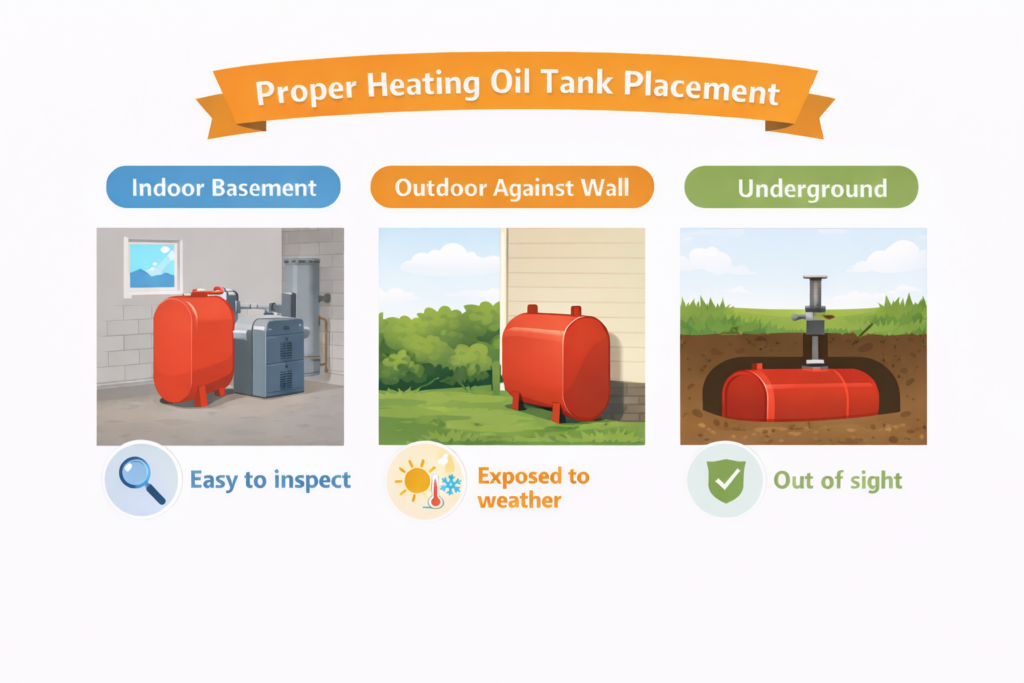
Above-ground tanks offer flexibility in placement, but each option has trade-offs:
- Indoor Placement: Basements, garages, or utility rooms provide protection from weather and temperature extremes. The downside is that the tank occupies valuable indoor space and may require adjustments to fit equipment and access areas.
- Outdoor Placement: Outdoor tanks free up indoor space and are easier to install in certain properties. However, they are exposed to snow, ice, and freezing temperatures, which can reduce lifespan if not properly insulated or protected.
Pros and Cons of Above-Ground Heating Oil Tanks
Advantages
- Lower Installation Costs and Faster Setup: Installation typically takes a half-day, as no excavation is required. Upfront costs generally range from $1,500 to $3,000, depending on size and placement.
- Ease of Inspection and Maintenance: Because the tank is visible, homeowners can spot rust, corrosion, or leaks early. Regular inspections prevent minor issues from becoming major environmental hazards.
- Simplified Repairs: Repairs are generally quicker and less expensive because technicians can access the tank without excavation equipment.
- Compliance with Local Codes: Many Northeast municipalities now prohibit new underground tank installations, making above-ground tanks the primary choice for replacements or new installations.
Disadvantages
- Weather Exposure: Outdoor tanks face harsh winters, including snow, ice, freezing temperatures, and strong winds. Indoor placement mitigates this, but space constraints may limit options.
- Aesthetic Concerns: Above-ground tanks are visible and may affect curb appeal or landscaping design.
- Space Requirements: Indoor tanks occupy basement or garage space; outdoor tanks take up yard area.
- Slightly Higher Theft Risk: Accessible tanks are more vulnerable to fuel theft, though this is relatively uncommon.
Key Factors to Consider When Choosing a Tank
- Property Layout and Space: Evaluate your indoor and outdoor spaces, including basements, garages, and yard areas. Placement must allow easy access for heating oil delivery and maintenance.
- Local Building Codes and Permits: Check municipal requirements. Many Northeast towns ban new underground tanks, and permits are usually required for both types.
- Budget:
- Above-ground installation: $1,500–$3,000
- Underground installation: $3,500–$6,000+
- Maintenance and inspection: Underground tanks are more expensive to service.
- Potential cleanup liability: Underground leaks can be catastrophic; above-ground leaks are easier and cheaper to catch early.
- Above-ground installation: $1,500–$3,000
- Tank Material:
- Steel: Durable, but can rust; lifespan ~15–20 years above-ground, shorter underground.
- Fiberglass: Resistant to corrosion, longer lifespan, higher upfront cost.
- Double-Walled: Extra layer of protection; increasingly required by municipalities.
- Steel: Durable, but can rust; lifespan ~15–20 years above-ground, shorter underground.
- Environmental & Safety Concerns: Regular inspections are essential. Homeowners are liable for environmental cleanup, regardless of tank age. Insurance may impose requirements or higher premiums for underground tanks.
- Home Age and Existing Infrastructure: Homes built pre-1990s likely have underground tanks. Tanks over 15–20 years old should be evaluated for replacement.
Tank Capacity Guide
The size of your residential oil tank directly affects how often you need deliveries and whether your home’s heating demands are met consistently. Standard above-ground tanks typically range from 275 to 400 gallons, while underground tanks can reach 1,000 gallons or more for large properties.
- 275-gallon tanks are generally suitable for homes up to 2,000 square feet.
- 330–400 gallons fit homes between 2,000 and 3,000 square feet.
- 500–1,000 gallons accommodate large homes or properties with high heating requirements.
Capacity needs depend not just on home size, but also on insulation quality, local climate zone, number of occupants, and overall heating usage patterns. Choosing the right size prevents running out of fuel in the coldest months and avoids unnecessary upfront costs for an oversized tank.
Signs You Need a Tank Replacement
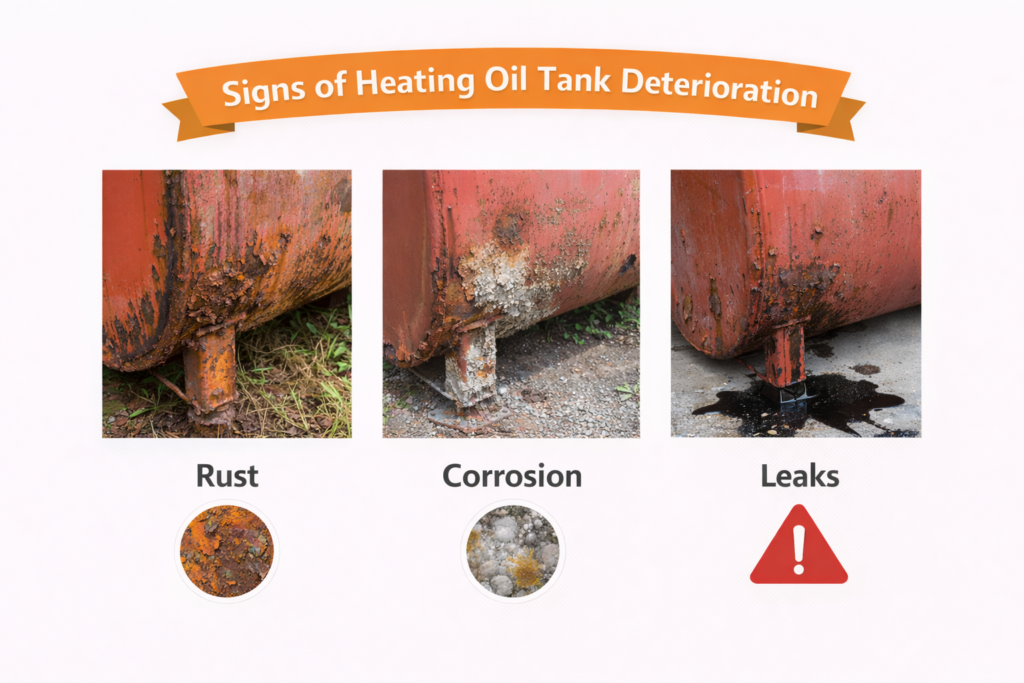
Even well-maintained tanks eventually age out. Key indicators that an oil tank replacement may be necessary include:
- Tank age over 15–20 years
- Visible rust, corrosion, or oil stains
- Leaks or odors around the tank area
- Dents, cracks, or physical damage
- Failed integrity tests or non-compliance with local regulations
- Purchasing a home with an existing underground tank
Underground tanks are especially prone to hidden issues. Leaks may remain undetected, potentially contaminating soil or groundwater. Early detection and replacement help avoid costly environmental cleanup and maintain safe heating operations. Replacing an old or leaky tank will also help lower your heating oil costs.
Transitioning from Underground to Above-Ground Tanks
Many homeowners are replacing aging underground tanks with modern above-ground heating oil tanks. This process requires careful planning:
- Proper removal or abandonment of the old tank to comply with environmental regulations (read our blog post on how to safely remove an old heating oil tank).
- Soil testing and remediation, if necessary, to ensure no contamination remains.
- Installation of a new tank, often double-walled for extra safety and leak protection (ROTH is a great brand option).
While the upfront cost of removal and installation may range from $3,500 to $6,000+ for underground tanks and $1,500–$3,000 for above-ground, the benefits are significant. Above-ground tanks allow easier inspections and maintenance, reduce the risk of environmental liability, and comply with most Northeast municipal regulations, which increasingly limit new underground installations.
Tank Material Options
Tank material affects durability, maintenance, and lifespan:
- Steel Tanks: Durable but susceptible to corrosion, particularly underground. Protective coatings extend life to 15–20 years for above-ground tanks.
- Fiberglass Tanks: Corrosion-resistant with longer lifespan potential, though typically more expensive upfront.
- Double-Walled Tanks: Include an inner and outer layer for leak prevention, often required by local codes for new installations (read more about why we recommend upgrading to a double-walled heating oil tank).
Choosing the right material ensures your home heating oil tank lasts longer, reduces the risk of leaks, and aligns with environmental safety standards.
Environmental and Safety Considerations
Safety and environmental responsibility are critical when managing fuel oil tanks:
- Leak Prevention and Detection: Regular inspections (at least annually for above-ground tanks) and modern leak detection systems for underground tanks help prevent costly spills.
- Environmental Protection: Homeowners are liable for cleanup if a tank leaks, even if it was installed by a previous owner. Underground leaks can cost $10,000–$50,000+ for soil and groundwater remediation.
Insurance Requirements: Some insurers require double-walled tanks or impose higher premiums for underground tanks due to contamination risk.
Tank Selector Quiz
Take this quick 5-question quiz to see whether an above-ground or underground tank fits your home, budget, and lifestyle best. It only takes a minute, and you’ll get a clear recommendation to help guide your next steps.
Heating Oil Tank Selector Quiz
1. Property type and available space:
2. Budget:
3. Home age:
4. Environmental priorities:
5. Local regulation awareness:
HOP Energy’s Tank Services
HOP Energy provides comprehensive fuel oil tank services across the Northeast, ensuring your tank installation or replacement meets safety, regulatory, and environmental standards. Our services include:
- Professional tank installations (above-ground and permitted underground tanks)
- Tank replacements and upgrades
- Routine inspections and maintenance
- Environmental compliance guidance
With over 90 years of combined experience and deep knowledge of state-specific regulations, HOP Energy ensures homeowners receive reliable, safe, and compliant solutions. Learn more about our services here: Fuel Oil Tank Services.
Frequently Asked Questions
Which is safer: above-ground or underground oil tanks?
Above-ground tanks are generally safer due to easier leak detection, but both types are safe when properly maintained.
How long do heating oil tanks last?
Above-ground tanks last 15–20 years, while underground tanks typically last 10–15 years, depending on material and soil conditions.
Can I still install an underground oil tank?
Many Northeast municipalities prohibit new underground installations. Existing tanks may be grandfathered, but always verify local codes.
What are double-walled oil tanks?
Double-walled tanks feature two layers to prevent leaks and protect the environment, which is increasingly required by modern regulations.
How much does it cost to remove an underground oil tank?
Removal costs typically range from $1,500–$4,000+, depending on size, location, and contamination levels.
Do I need permits for tank installation?
Yes. Most municipalities require permits for both above-ground and underground tanks.
Can I install an oil tank myself?
DIY installation is strongly discouraged. Professional installation ensures safety, code compliance, and warranty protection.
What happens if my underground tank leaks?
Homeowners are responsible for cleanup, even if the tank was installed by a previous owner. Proper inspections and maintenance are essential.
How often should oil tanks be inspected?
Annual inspections for above-ground tanks are recommended. Underground tanks require more frequent professional assessment if still in use.