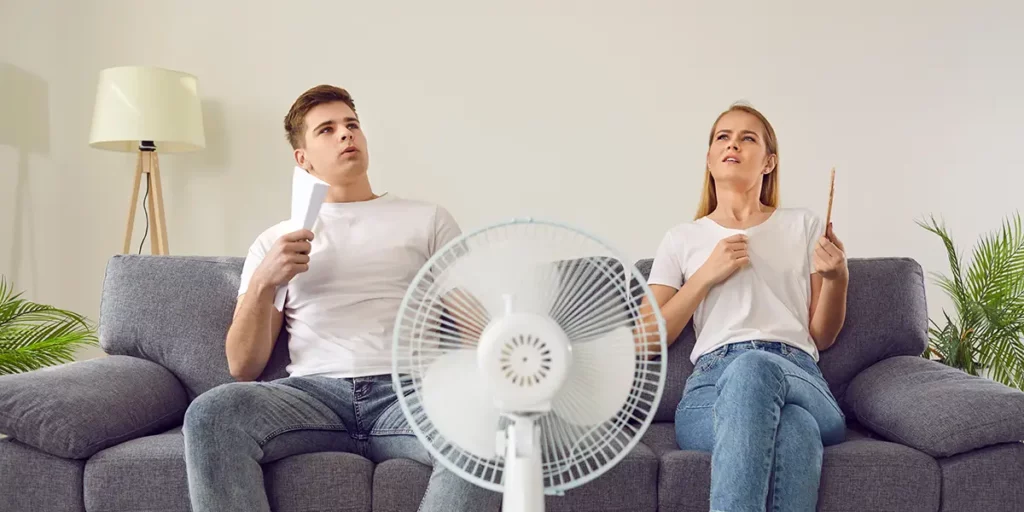

Few things are more frustrating than dealing with rooms that are consistently hotter or colder than the rest of your home. If you’re experiencing uneven heating or uneven cooling, several common HVAC and airflow issues could be to blame.
Common Causes of Uneven Home Temperatures
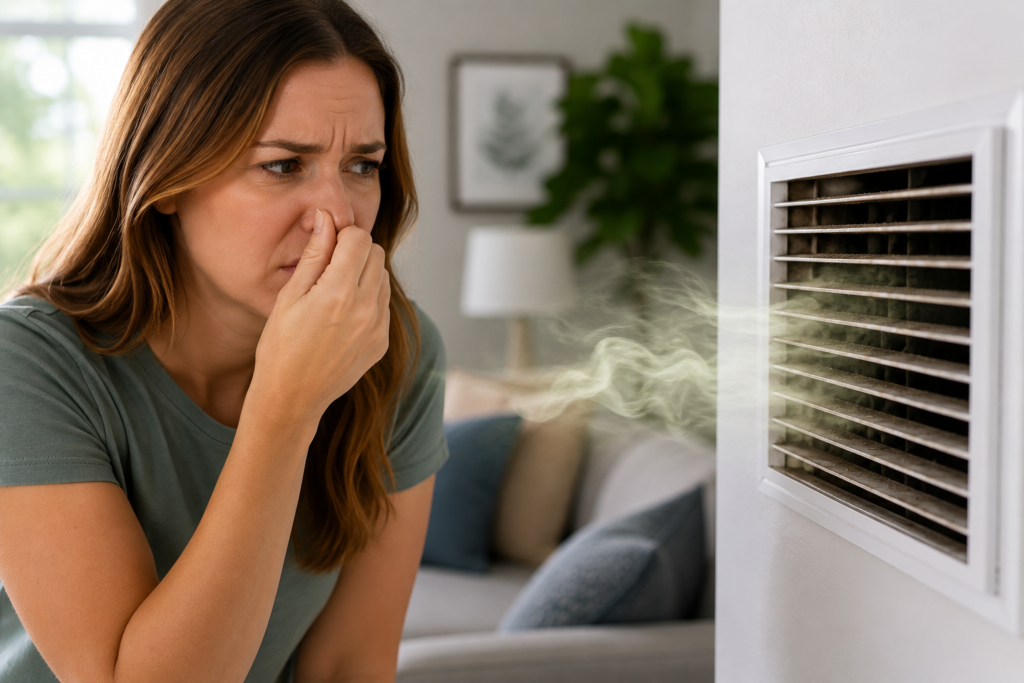
Closed or Blocked Supply Vents
Supply vents deliver conditioned air throughout your home. If furniture, rugs, curtains, or other objects block those vents, airflow can be restricted and leave certain rooms warmer or cooler than the rest of the house.
Dirty or Clogged Air Filters
A dirty air filter restricts airflow throughout your HVAC system and can contribute to uneven temperatures. Replacing a clogged filter is one of the simplest ways to improve comfort and system performance.
Leaky or Uninsulated Ductwork
Leaky ducts can allow heated or cooled air to escape before it reaches the intended room. Uninsulated ductwork can also lose energy as air travels through attics, crawl spaces, and other unconditioned areas.
Poor Thermostat Placement
Your thermostat can only respond to the temperature where it’s located. If it’s near a sunny window, kitchen, or drafty area, it may cause the system to run too much or not enough for the rest of the house.
An HVAC System That's Too Large or Too Small
An improperly sized HVAC system (calculated by BTUs) can create comfort problems throughout your home. Oversized systems may short-cycle, while undersized systems can struggle to maintain consistent temperatures during extreme weather.
Excessive Heat Gain From Windows and Sunlight
Rooms with large windows or significant sun exposure often absorb more heat throughout the day. Window coverings and energy-efficient windows can help reduce this effect.
Why Upstairs Is Almost Always Warmer
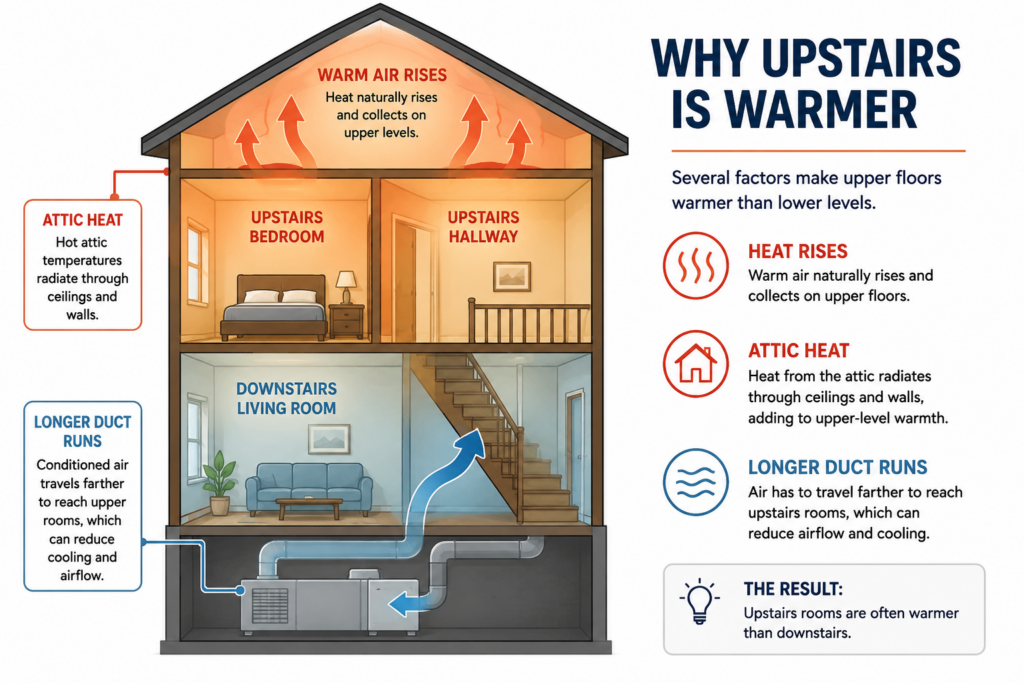
Heat naturally rises, causing warm air to collect on upper floors. At the same time, upstairs rooms are often closer to hot attic spaces, which can transfer heat through ceilings and walls.
Longer duct runs can also reduce airflow to second-floor rooms. When rising heat, attic temperatures, and reduced airflow combine, upstairs bedrooms often feel noticeably warmer than the rest of the home.
Things You Can Try Right Now
Before calling a professional, try these simple steps:
- Open all supply vents. Make sure furniture, curtains, and rugs aren’t blocking airflow.
- Replace your air filter. A clean filter improves airflow and system efficiency.
- Keep interior doors slightly open. This can improve return airflow and help balance temperatures.
- Use ceiling fans correctly. In summer, fans should rotate counterclockwise to create a cooling effect.
- Close blinds and curtains during peak sunlight hours. This helps reduce heat gain in warmer rooms.
- Check attic access points. Poorly insulated attic doors can allow excess heat into upper floors.
When DIY Fixes Don't Work: Time to Call a Professional
If you’ve replaced the air filter, checked your vents, and made basic adjustments without success, it’s time for a professional evaluation.
Persistent temperature imbalances are often caused by duct leaks, improper air balancing, HVAC airflow problems, or an incorrectly sized system. These issues typically require professional diagnosis and repair.
From airflow diagnostics and duct repairs to system upgrades and replacements, HOP Energy’s HVAC professionals can help identify the source of the problem and restore comfort throughout your home. We also offer HVAC maintenance plans to help prevent airflow restrictions and other issues that can contribute to uneven temperatures.
Air Balancing and Duct Dampers
If temperature differences persist, your HVAC system may need a professional service called air balancing.
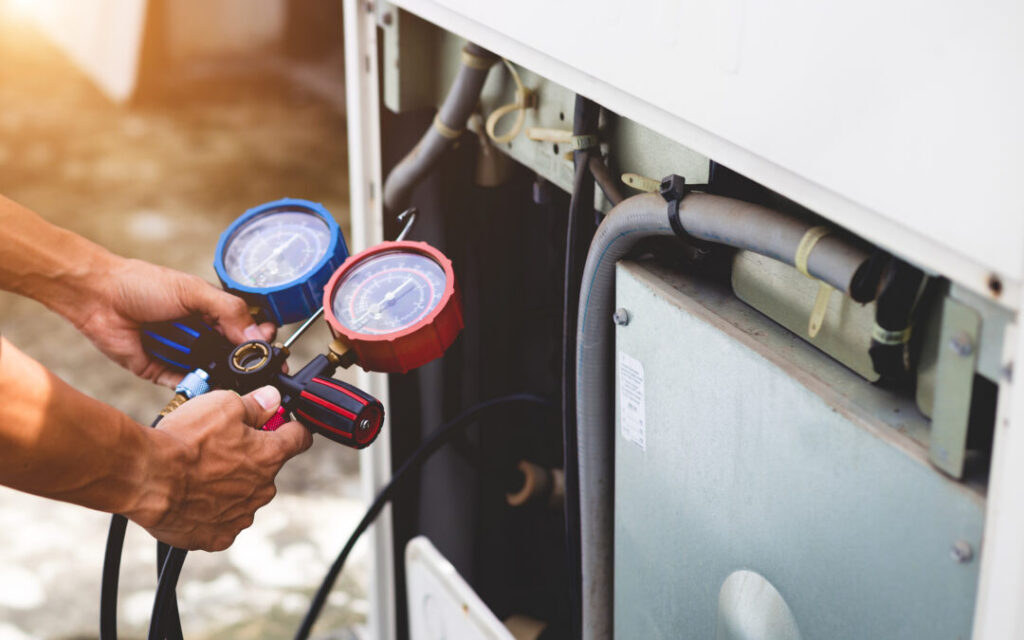
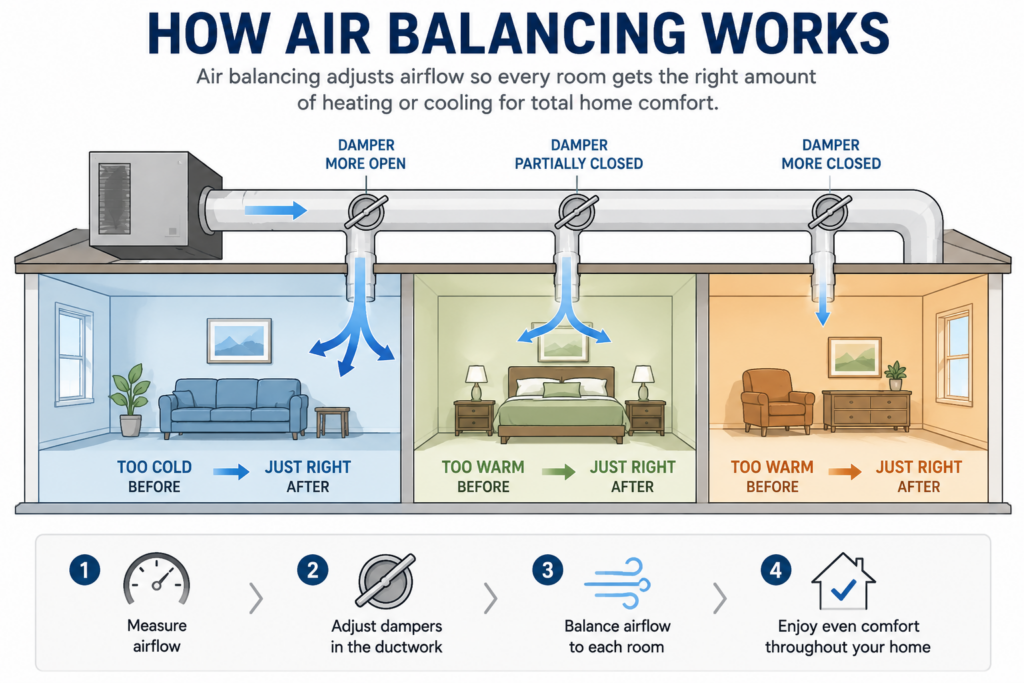
Air balancing is the process of adjusting airflow so each room receives the appropriate amount of heated or cooled air. HVAC technicians use specialized tools to measure airflow and make adjustments throughout the system.
One common air balancing solution involves duct dampers. These adjustable devices are installed within ductwork and allow technicians to increase or reduce airflow to specific areas of the home.
When properly adjusted, dampers can help eliminate hot and cold spots without replacing your entire HVAC system.
A Longer-Term Fix: Zoned HVAC and Mini-Splits
Some homes have chronic hot and cold spots that are difficult to solve through traditional airflow adjustments alone.
For homes with persistent temperature differences between rooms, ductless mini-split heat pumps are often the most effective long-term solution. Because each indoor unit operates independently, mini-splits provide precise temperature control exactly where it’s needed. HOP regularly installs these systems to help solve persistent hot and cold spots while also improving overall energy efficiency.
Zoned HVAC systems offer similar benefits by dividing the home into separate comfort zones with independent temperature control. Both solutions can improve comfort, energy efficiency, and overall system performance.
Frequently Asked Questions
Why is one room hotter than others?
The most common causes include blocked vents, poor airflow, ductwork issues, excessive sunlight, inadequate insulation, or thermostat placement problems. A professional HVAC inspection can help identify the exact cause.
How much temperature difference between rooms is normal?
A small temperature difference of two to three degrees is generally normal. Larger differences may indicate airflow problems, insulation issues, or HVAC system imbalances.
Can closing vents in unused rooms help with uneven temperatures?
Usually not. Closing vents can increase pressure within the duct system and may actually reduce overall HVAC efficiency. It’s generally better to keep vents open unless advised otherwise by an HVAC professional.
Why is my upstairs so much hotter than downstairs?
Heat naturally rises; upper floors are often exposed to attic heat, and second-floor ductwork frequently has longer runs. These factors combine to make upstairs rooms warmer than lower levels.
What does air balancing cost?
The cost varies based on the size of your home and the complexity of your HVAC system. A professional HVAC contractor can evaluate your system and provide recommendations based on your specific needs.