
Winter in the Northeast brings beautiful snow-covered landscapes … and the very real threat of frozen pipes. When temperatures drop below freezing, the water inside your pipes can freeze, expand, and cause thousands of dollars in damage. The good news is that a little prevention goes a long way to prevent frozen pipes.
Why Frozen Pipes Are a Big Deal
When water freezes, it expands by about 9%. That might not sound like much, but inside a rigid pipe, that pressure can reach thousands of pounds per square inch. This pressure causes burst pipes, water damage, and emergency repair bills that nobody wants to deal with in the middle of winter.
How to Tell If Your Pipes Are Frozen
Catching frozen pipes early can prevent them from bursting. Here are the warning signs:
Reduced Water Flow: Turn on your faucets. If you get a trickle instead of normal water pressure, or no water at all, you likely have a frozen pipe somewhere in the line.
Frost on Exposed Pipes: Check visible pipes in unheated areas like your basement, crawl space, or garage. If you see frost or ice on the outside of the pipe, that’s your confirmation.
Strange Smells: A complete blockage from ice can cause water and waste to back up, creating unpleasant odors from your drains.
Unusual Sounds: Gurgling, clanking, or whistling when you turn on faucets can indicate ice blockages disrupting normal water flow.
Cold Spots on Walls: Feel along exterior walls, especially near plumbing fixtures. An unusually cold patch might indicate a frozen pipe behind the drywall.
If you notice any of these signs, act quickly. Turn off your main water supply and call an emergency plumber right away to minimize potential damage.
How to Prevent Pipes from Freezing Inside Your Home
Let Faucets Drip
Moving water is much harder to freeze than standing water. During extreme cold snaps, let faucets connected to exposed pipes drip slightly—even a trickle helps. Yes, it wastes a bit of water, but that’s nothing compared to the cost of burst pipe repairs.
Keep Your Home Warm
It’s tempting to lower the thermostat when you’re away to save money, but don’t go below 55°F during winter. This is especially important for pipes in exterior walls or unheated spaces. Open cabinet doors under sinks to let warm air circulate around the plumbing.
Seal Air Leaks
Cold air sneaking in through cracks and gaps can freeze nearby pipes. Check around pipes where they enter your home, and seal any openings with caulk or foam insulation. Don’t forget to inspect areas around dryer vents, electrical wiring, and window frames.
Keep Interior Doors Open
Closed doors can trap cold air in bathrooms and other rooms with plumbing. Keep interior doors open to maintain consistent temperatures throughout your home, especially in rooms with exterior walls.
Schedule Heater Service
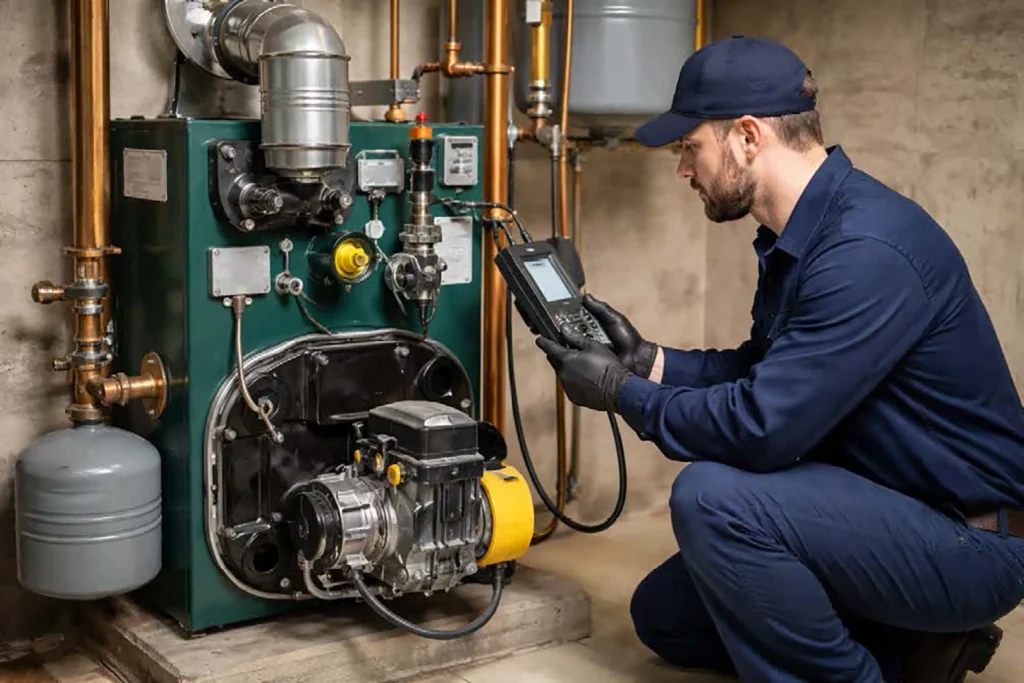
If you have been having home heating issues that are making you worry for your pipes, please give us a call. We’ll be happy to come out and fix up that furnace or boiler (provided that you live in one of the areas we service).
How to Keep Pipes from Freezing Outside and in Crawl Spaces
Here’s how to insulate outside water pipes from freezing and protect vulnerable areas like crawl spaces:
Insulate Exposed Pipes
Pipes in unheated areas like crawl spaces, attics, and garages are your most vulnerable spots. Wrap them with foam pipe insulation sleeves—they’re inexpensive, easy to install, and highly effective. For maximum protection, use insulation with a thickness of at least 3/8 inch.
Heat Tape for High-Risk Areas
For pipes that freeze repeatedly, consider heat tape or heat cable. These electrical products provide consistent warmth along the pipe length. Just make sure to follow manufacturer instructions carefully—improper installation can create fire hazards.
Disconnect and Drain Outdoor Faucets
Before the first freeze, disconnect garden hoses and drain outdoor faucets. If you have shut-off valves for exterior faucets inside your home, close them and then open the outside faucet to drain any remaining water.
Insulate Crawl Space Vents
Crawl spaces are notorious trouble spots. Close foundation vents during winter to keep cold air out, and consider adding insulation to crawl space walls. Some homeowners also use temporary plastic sheeting as an extra barrier against frigid air.
Protect Pipes in the Crawl Space
For crawl space pipes specifically, a combination approach works best: foam pipe insulation plus ensuring the space itself stays above freezing. You might need to add a small space heater (designed for crawl space use) during extreme cold, or improve overall insulation in the area.
After protecting all your pipes, check out our blog post Top 5 Tips to Stay Warm Inside and Protect Your Home, which offers a few more tips for winterizing your home.
Which Pipes to Cover During a Freeze
Not all pipes need the same level of attention. Focus your efforts here:
High Priority:
- Pipes in exterior walls facing north or northwest (these get the least sun)
- Pipes in unheated crawl spaces and attics
- Outdoor faucets and hose bibs
- Pipes in unheated garages
Medium Priority:
- Pipes in basements along exterior walls
- Pipes near windows or vents
- Pipes in rooms that aren’t regularly used
Lower Priority:
- Pipes in heated, insulated spaces
- Interior plumbing surrounded by conditioned air
When in doubt, more insulation never hurts. The cost of materials is minimal compared to repair bills.
What to Wrap Pipes With to Keep Them from Freezing
You have several good options for pipe insulation:
Foam Pipe Sleeves: These pre-slit tubes slip over pipes easily and provide excellent insulation. They’re available in various diameters at any hardware store. Look for sleeves at least 3/8 inch thick for best results.
Fiberglass Pipe Wrap: Similar to the insulation in your walls, fiberglass wrap offers great thermal protection. It requires a bit more effort to install but works well for odd-shaped pipes or tight spaces.
Heat Tape or Heat Cable: For pipes that freeze despite insulation, electric heat tape maintains a constant temperature. Choose self-regulating heat tape that adjusts output based on temperature (it’s safer and more energy-efficient).
Pipe Heating Cable: Similar to heat tape but designed for longer runs. Wrap it around the pipe in a spiral pattern, then cover with foam insulation for double protection.
Temporary Solutions: In a pinch, old towels, newspapers, or even pool noodles split lengthwise can provide short-term insulation. These aren’t ideal for all winter, but they’re better than nothing during a cold snap.
What Not to Use: Avoid materials that trap moisture against the pipe like cloth without waterproofing, or anything flammable near heat sources.
Whatever you choose, make sure to cover the entire length of vulnerable pipes, including elbows and joints where cold can penetrate more easily.
Frequently Asked Questions
What temperature will freeze pipes?
Pipes typically start freezing around 20°F, especially in unheated spaces or when exposed to wind. But the risk kicks in anytime it’s below 32°F if your pipes aren’t insulated or if the cold sticks around for a while.
Can I use a space heater to prevent frozen pipes?
Yes, but be careful. Use a heater rated for basements or crawl spaces, never leave it unattended, and keep it away from anything flammable. It’s a solid backup option during extreme cold.
What should I do if my pipes are already frozen?
Find the frozen section (it’ll feel coldest), keep the faucet open, and apply gentle heat with a hair dryer, heating pad, or warm towels. Never use open flames or torches—they can damage pipes or worse. If you can’t find the freeze or if a pipe bursts, shut off your main water valve and call a licensed plumber right away.
Will leaving cabinet doors open really help?
It really does. Open cabinet doors let warm air reach the pipes under your sinks, especially important for exterior walls. Simple move, big impact.
Do I need to worry about PEX pipes freezing?
PEX is tougher than copper or PVC and can expand a bit without bursting, but it’s not freeze-proof. The water inside can still freeze and block flow, and repeated freeze-thaw cycles will eventually cause damage. Bottom line: still insulate them.
The Bottom Line on Detecting & Preventing Frozen Pipes
If you’ve discovered frozen pipes, visible ice damage, or you’re dealing with a burst pipe emergency, it’s time to call a plumber.
If your pipes haven’t frozen yet, you still have time to take preventive measures like installing heat tape, improving insulation in vulnerable areas, or upgrading to frost-proof outdoor faucets. Putting in a little work now can save you from major headaches when the next cold snap hits.
While frozen pipes require a licensed plumber, the best defense is keeping your home properly heated. Contact our home heating experts to ensure your heating system is ready for winter.