Utility Bill Stress and How Americans Plan to Cut Energy Costs in 2024

sitting by window during winter

With winter here, home heating costs are rising nationwide, and many Americans are spending more time inside their homes. This can affect utility bills as the lights stay on longer and more energy is required to heat homes as temperatures drop outside. 

What are utility bills doing to American budgets? We wanted to know how Americans are feeling about their utilities, so we surveyed 1,002 across the nation on how much difficulty they’re having paying their bills – and whether or not they could accurately guess the cost of each of their utilities. For the purposes of this study, we stuck to examining primarily electric, gas, and oil utility bills.

Table of Contents

Many Americans are Struggling to Pay Utility Bills
Survey data on utility bill troubles - HOPenergy.com

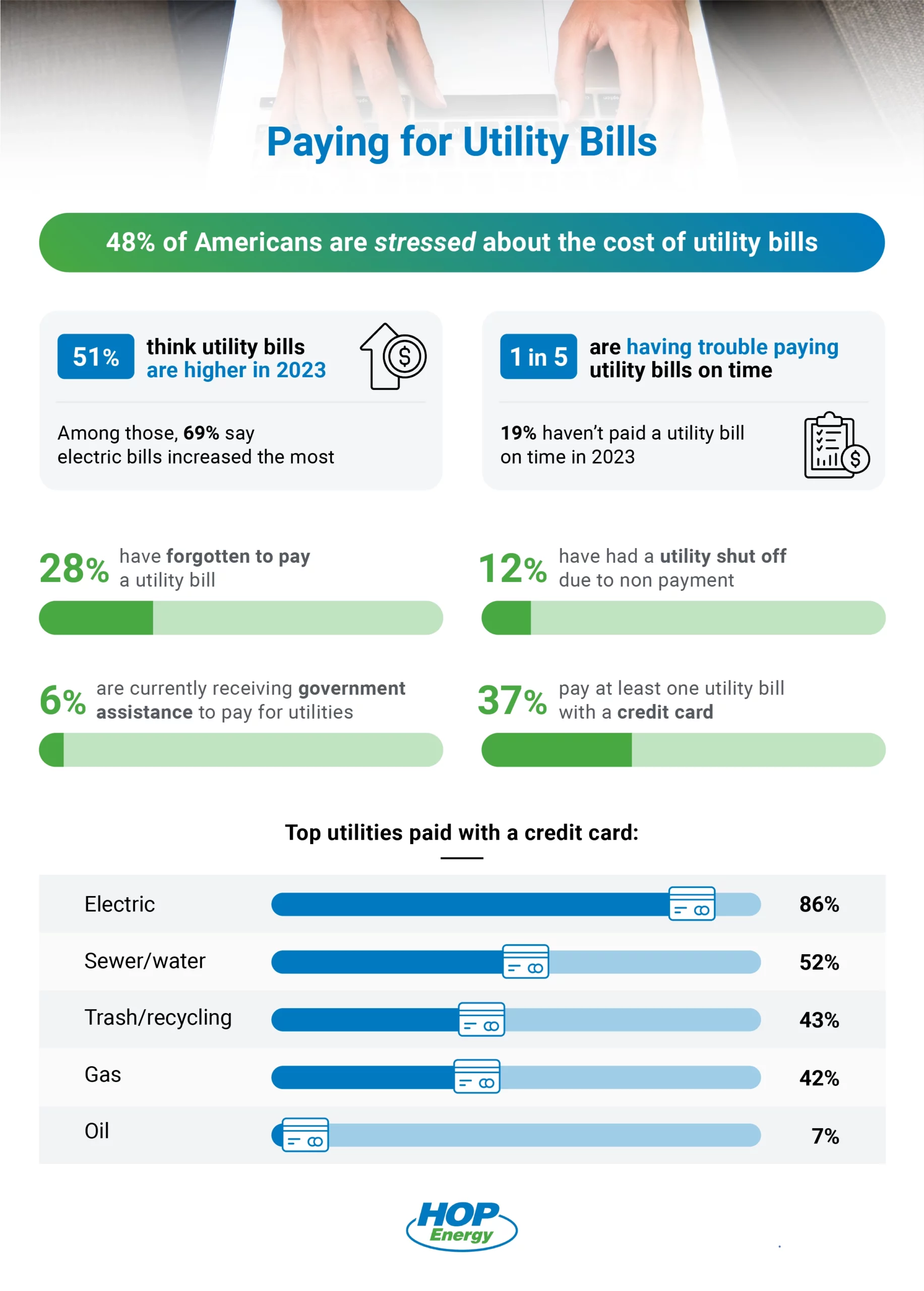
The cost of living has increased quite a lot in the last few years, and Americans are still feeling the squeeze of inflation in all aspects of their lives– utility bills are no different. 48% of Americans are stressed about the cost of their utility bills, and 1 in 5 are having trouble paying bills on time, with a similar number (19%) having been late on at least one utility in 2023.

Utility bill stress isn’t unwarranted, either: inability to pay can create dire consequences. A danger of nonpayment of utility bills is eventual shut off; of those surveyed, 12% have had a utility bill shut off due to nonpayment at some point in their lives. There is good news, however: hardship funds for utility bills in the form of government assistance is typically available, and 6% have taken advantage of that. Knowing that there’s a safety net can certainly help relieve that utility bill anxiety! 

Over half of Americans feel that utility bills are higher in 2023 than in past years. It seems nearly 7 in 10 are asking themselves “Why is my electric bill so high?”– 69% say that of all utility bills, electric bills increased the most. 

Paying bills monthly can be a hassle- 28% have forgotten at least once to pay a utility bill on time, and autopay remains an appealing option for many. 

Over 1 in 3 Americans pay at least one utility with a credit card rather than direct debit from a bank, and of those, 86% do so for their electric bills, followed by just over half for their sewer and/or water bills. Trash and recycling barely beats out gas when it comes to credit card payments, while only 7% use a card for their oil payments.

Estimated versus Actual Utility Bill Costs by Utility

Given that so many Americans are stressed about their utilities and a large number struggle monthly to pay their bills on time, how good are Americans at accurately estimating their utility expenses? We asked our respondents to guess their utility bill for electricity, gas, and oil and then compare their most recent statements with their guesses. Here’s what we found:

It turns out Americans are accurate- the average monthly utility bill for gas, electric, and oil was only off by a small percentage from what Americans had estimated. They averaged an inaccuracy of less than $10 across all utilities, with oil having the largest difference between estimation (Americans underestimated by an average of $17) and gas having the smallest, with an average discrepancy of $1.

Youth might have some advantages, but utility knowledge isn’t one of them: 56% of Gen Z underestimated their utility bills. 

Overall, 22% of Americans pay a flat rate on at least one utility, and half use autopay for at least one utility bill. 

We also examined some deeper demographic information to determine which type of homeowner was most and least accurate overall, as well as which type of homeowner overestimated or underestimated the most: 

  • Greatest percentage of homeowners who were accurate: Mobile Home (63%)
  • Least accurate homeowners: Single Family Homeowners (39%)
  • Largest percentage overestimating: Townhome (41%) 
  • Largest percentage underestimating: Multi-family homeowner (39%)

How did Americans feel about this estimation exercise? 1 in 5 were surprised about how high their utility bills were. As for the rest:

Accuracy might have won out at 40% of respondents claiming those bragging rights, but nearly 1 in 3 underestimated, and 28% overestimated their bills.

Top 10 Ways Americans are Cutting Utility Costs in 2024

71% of Americans are trying to cut costs in 2024.

Given so many are stressed or struggling about their bills, it’s no surprise that over 7 in 10 are planning on cutting costs on utilities in 2024. Of those, the vast majority are focusing especially on cutting electricity consumption, followed by water, natural gas, trash, and finally heating oil.

Nearly 3 in 5 Americans will be adjusting their thermostats in 2024 to being closer to the outside temperature; this is the most popular way to cut utility costs in 2024. After that, just over half will unplug items not in use, and 45% will use energy efficient lightbulbs like LEDs in lieu of the traditional incandescent bulb. 43% will take shorter showers, and a similar percentage are planning on using less hot water. Two in five will keep unused rooms closed to concentrate heat, while 29% are planning on winterizing the home. Finally, 28% will be acquiring energy-efficient appliances.

4 Things Experts Recommend to Cut Utility Costs in 2024

What do experts recommend to cut utility costs in 2024? HOP Energy recommends these 4 ways to save:

1) Programmable Thermostats

Programmable thermostats provide the convenience of scheduling temperature changes to optimize the efficiency of your heating system. These devices can be set to reduce the temperature during times when you are not at home or while sleeping, leading to energy conservation and financial savings.

2) Zone Heating

Zone heating focuses on warming specific sections of your home instead of the entire area. This can be accomplished through zoned HVAC systems, the use of space heaters, or the installation of fireplace inserts. By targeting heating to only used areas, zone heating can lead to considerable reductions in heating costs, as it minimizes the energy spent on heating unoccupied spaces.

3) Proper Insulation

Effective insulation is essential for maintaining energy efficiency in a building. It involves insulating walls, attics, and floors, as well as meticulously sealing any gaps. Key actions include enhancing attic insulation, sealing openings around doors and windows, and installing energy-efficient windows. These improvements are vital for minimizing heat escape and consequently lowering heating costs.

4) Weatherization

Weatherization involves a set of strategies aimed at enhancing a building’s energy efficiency. This process typically involves sealing gaps with caulking and weather-stripping, adding insulation to attics and basements, ensuring ductwork is airtight, and replacing or upgrading doors and windows. By implementing these measures, heat loss and air drafts are significantly reduced, resulting in decreased heating expenses.

With winter here, keeping your home warm is incredibly important, and HOP Energy offers a variety of services to help- from delivering oil to installing new HVAC, heat pump, or furnace systems. Don’t forget to schedule your oil or propane deliveries!

Methodology

In December 2023, we surveyed 1,002 homeowners about their recent utility bills as well as their thoughts and feelings on utilities generally. Respondents ranged in age from 18 to 81 with an average age of 46, and 50% were men, 49% were women, and 1% were either nonbinary or preferred not to say. 

83% were single-family homeowners, 3% multifamily homeowners, 4% apartment owners, 4% townhome owners, 3% condo owners, and 4% mobile home owners.

Fair Use

When using this data and research, please attribute by linking to this study and citing HOP Energy.

6 Types of Home Heating Systems for Residential Homes

home heating air flow

Choosing the right heating system for your home can feel overwhelming with so many options available. We’ll review 6 different types of home heating systems, considering factors like cost, efficiency, and the size of your residential home, and how smart technology is reshaping home comfort.

Table of Contents

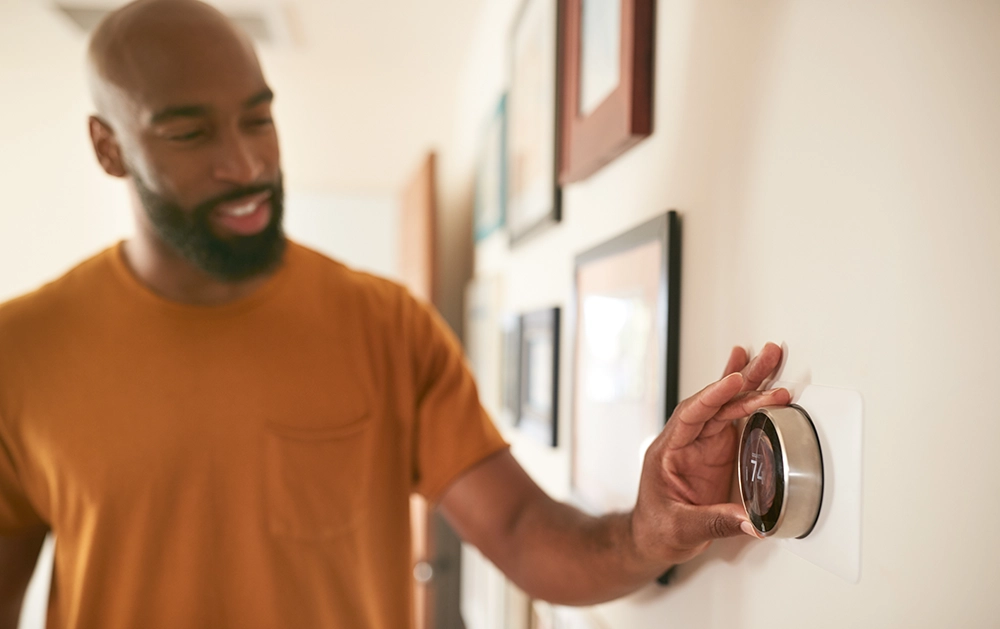
Man heating home with smart thermostat

Central Heating Systems: Furnaces and Boilers

Central heating systems form the backbone of home heating, providing efficient and consistent warmth throughout your residence by distributing heat from a central source. These systems come in different types, offering versatility to suit various needs.

1) Furnaces: A Versatile Heating Solution

Furnaces are one of the most popular and versatile central heating systems. They operate on natural gas, oil, or electricity and efficiently produce and distribute heat throughout your home. Key points to note about furnaces:

Efficiency: Furnaces are highly efficient, converting fuel into heat with minimal waste, reducing heating costs for homeowners.

Lifespan: Well-maintained furnaces can last 15 to 30 years, and regular maintenance, including filter changes and component inspections, is essential.

Versatility: Furnaces are adaptable to various home sizes and layouts, making them a reliable choice for many residences.

2) Boilers: Radiant Comfort with Steam or Hot Water

Boiler heating systems are another popular choice for central heating, utilizing steam or hot water to provide consistent warmth throughout your home. Key considerations for boilers:

Radiation Method: Boilers use either steam or hot water to distribute heat, with hot water systems being prevalent in modern homes due to their efficiency.

Lifespan: Boilers can last 15 to 30 years with proper maintenance and regular inspections to ensure smooth and efficient operation.

Efficiency: Boiler systems offer even heat distribution, eliminating hot or cold spots in your home and promoting energy efficiency.

Maintenance: Regular maintenance, including leak checks and heat exchanger cleaning, is crucial to prolong your boiler’s lifespan and efficiency.

3) Ductless Mini-Split Systems: Zoned Comfort and Efficiency

Ductless mini-split systems are a versatile solution for zoned heating and cooling in homes. These systems consist of an outdoor unit connected to indoor air handlers, providing innovative climate management.

Zoning and Temperature Control

Ductless mini-splits excel in zoning, dividing your home into temperature zones with individual thermostats and air handlers. This customization offers precise comfort control, conserving energy by heating or cooling only the used areas and reducing waste and utility costs.

Energy Efficiency Benefits

Ductless mini-splits are highly energy-efficient due to their lack of ductwork, which reduces energy loss. Inverter technology adjusts the compressor’s speed for consistent comfort and energy savings. With maintenance, these systems can last up to 20 years.

Heat Pumps: Ductless mini-splits use heat pumps for heating and cooling

Air source and ground source heat pumps are common. The air source extracts outdoor heat, while the ground source uses underground loops. The choice depends on climate and space. Well-maintained heat pumps are energy-efficient and durable, offering long-term savings.

Ductless mini-splits are an excellent choice for efficient and customizable home comfort. At HOP Energy, we specialize in installation, maintenance, and service for these systems, ensuring extended lifespan and energy efficiency.

brother and sister drawing on a warm floor

4) Radiant Floor Heating: Cozy and Efficient

Radiant floor heating is a comfortable, energy-efficient way to warm your home during colder months. Unlike traditional systems, it heats the floor, offering exceptional comfort and efficiency. Two primary types are available:

Electric Radiant Floor Heating Systems: These systems use electric cables or resistance wires under the floor. With proper maintenance, they can last up to 40 years, providing simplicity and versatility.

Hydronic Radiant Floor Heating Systems: These systems circulate heated water through tubing beneath the floor. They are known for their energy efficiency and can last for decades with regular maintenance.

Comfort: It provides even heat distribution, eliminating cold spots and drafts. The warmth gently rises from the floor, creating a cozy environment that is perfect for barefoot comfort during colder seasons.

Energy Efficiency: Radiant heating is efficient, as it heats objects and people directly, reducing heat loss and energy consumption. It also eliminates the need for radiators, baseboard heaters, or ductwork, saving space and operating silently.

Regular maintenance, including inspections and repairs, is crucial to ensure your radiant floor heating system’s longevity and efficiency. At HOP Energy, we have the expertise to help you install and maintain your radiant floor heating system, ensuring years of cozy, energy-efficient comfort in your home.

5) Space Heaters: Personalized Warmth with Versatility

Space heaters are portable solutions designed to bring warmth to specific areas of your home, offering customized comfort during colder seasons. These compact devices come in three primary types, each tailored to deliver warmth in its unique way:

Convection Space Heaters: These heaters warm the room by heating the air. A heating element raises the air temperature, causing it to circulate and maintain even warmth. Convection space heaters are ideal for enclosed spaces and maintaining consistent temperatures.

Radiant Space Heaters: Radiant heaters emit infrared radiation to directly warm people and objects in their path. They provide quick, localized warmth, making them suitable for personal comfort and spot-heating specific areas within a room.

Fan-Forced Space Heaters: These heaters combine a heating element with a fan to distribute warm air rapidly, heating larger spaces evenly and quickly.

Lifespan and Safety:

Space heaters are typically designed for shorter-term use, with a typical lifespan of 10-15 years when well-maintained. While they are effective for supplemental heating, safety is paramount:

  • Keep space heaters away from flammable materials.
  • Plug them directly into wall outlets, avoiding extension cords.
  • Regularly inspect cords and plugs for damage.
  • Turn off space heaters when leaving the room or going to bed.
  • Place them on a stable, level surface to prevent tipping.

Safety is critical when using space heaters to prevent fire hazards and protect your home and family. Proper maintenance, including cleaning and checking for wear or damage, is also essential for extending their life and maintaining efficiency.

6) Solar Heating & Smart Home Solutions: Efficiency and Sustainability

Solar heating systems are eco-friendly, reducing your carbon footprint and energy costs by harnessing sunlight. They consist of two main types:

Solar Panels: Capture sunlight to heat air or water for home use. They last 25-30 years with proper maintenance.

Solar Air Heaters: Directly heat air for space heating, with a lifespan of up to 20 years when well-maintained.

Smart Home Heating Solutions: Enhanced Efficiency and Convenience

Integrating technology into your heating system boosts efficiency and convenience:

Remote Control: Adjust settings from anywhere with a smartphone or tablet.

Energy Savings: Smart thermostats optimize your heating system, reducing waste.

Integration: Compatible with smart home ecosystems for voice control and automation.

Longevity: Lifespan depends on supported technology.

HOP Energy specializes in these innovative solutions, offering installation and maintenance services to create a greener, more efficient, and comfortable home heating system.

a young couple making a decision together in their new home

Choosing the Right Home Heating System

Selecting the right heating system for your home is a crucial decision. Factors like climate, energy efficiency, budget, and your family’s specific needs should all be considered. Our expert technicians at HOP Energy can help you make this choice.

HOP Energy can Help With Different Types of Home Heating

HOP Energy is your trusted partner for all your home heating needs. With our expertise in various heating systems, we offer installation, maintenance, and repair services to ensure your home stays warm and comfortable. Proper installation and maintenance are key to extending the lifespan of your heating system and maintaining its efficiency. We are committed to providing top-notch service to meet these needs.